
Stone, Marble & Granite Quality Inspection
--- Safeguard Your Projects with Professional Quality Assurance
-
Natural stone—including Marble, Granite, Quartzite, Onyx, Travertine, Basalt, Slate, etc.—is a timeless pick for architecture, interiors, and landscaping, prized for durability, beauty, and unique patterns. Yet substandard stone brings costly issues (cracking, fading, leaks, even structural risks), damaging project value and your reputation.
Veriquality specializes in natural stone inspection for all kinds of natural stones (Marble, Granite, Quartzite, Onyx, Travertine, Basalt, Slate, etc.), shielding global importers, retailers, and contractors from these risks. Our rigorous checks catch flaws, ensuring you get premium, export-ready stone that meets your quality, aesthetic, and project needs—with Veriquality, you buy peace of mind too.
So, What do you know about natural stone inspection? How to check natural stone at factory? Here we’ll walk you through the standard inspection protocols to ensure you get the best value for your money.
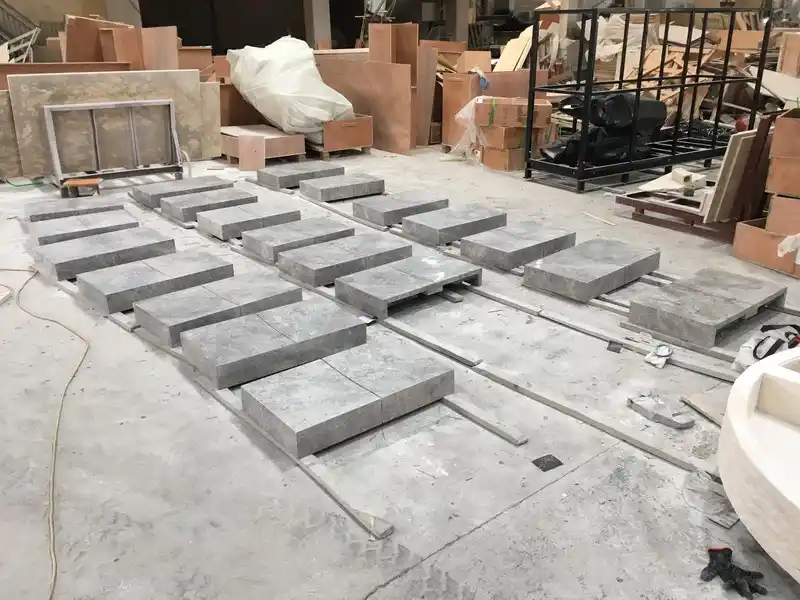
Aesthetic Consistency
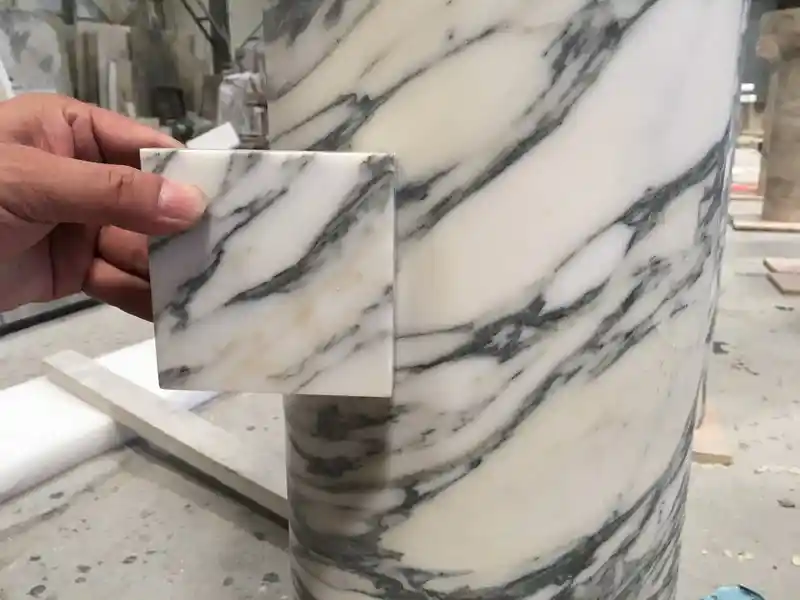
- Color Uniformity
Compare with master sample to check discolored patch, color deviation or uneven tone.
Inspect inner and outer surfaces separately; prevent abrupt color transition.
Ensure consistent color across same-batch units. - Veining & Texture
Verify veining conforms to approved samples, without missing or redundant veins.
Check veining for breaks, disconnection and unnatural distortion;
maintain natural geological flow.Ensure uniform surface texture, grain and handfeel. - Mineral Traits
Check mineral fleck size and distribution match the sample, with no uneven clustering.
No abnormal mineral deposits or unapproved stains/spots.
Size & Dimension Accuracy
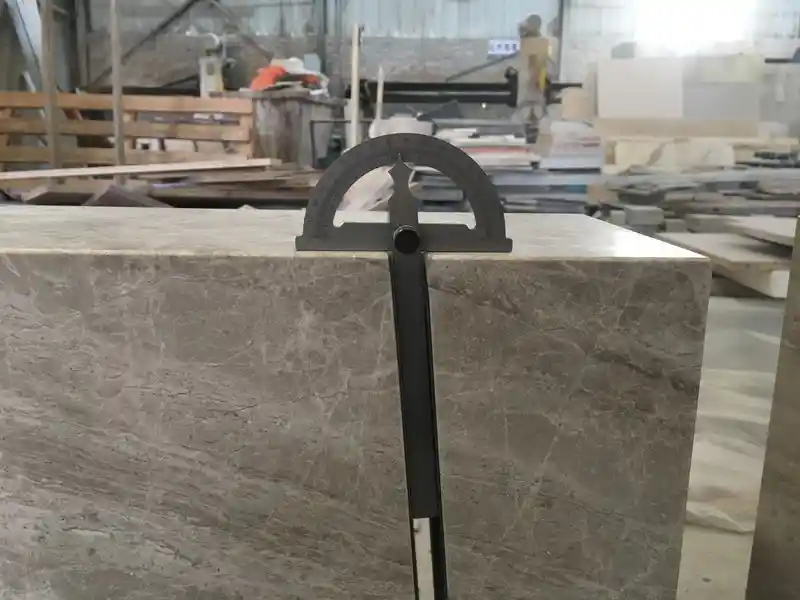
- Key Dimensions: Measure the following dimensions with a caliper and tape measure, and compare with the design drawing:
- Overall size and details: Length, width, height, cut hole size, distance from edge, curve, chamfering
- Surface Flatness: Place a level on the surface to check for warping or bowing
- Edge & Corner: Check edge straightness with a straight edge
- Corner squareness: Use a square ruler to measure the right angle of outer and inner corners
Surface Quality
- Scratches
- Chips & Cracks
- Obvious pits, holes or pores
- Uneven polishing/chamfering, haze, or dull spots
- Tool marks, grinding marks, repair mark, glue stain or residual polishing powder
- Foreign inclusions (e.g., metal fragments, stone chips, or dust embedded in the surface)
- Uneven texture caused by incomplete processing
- Color or oil stain, rust mark
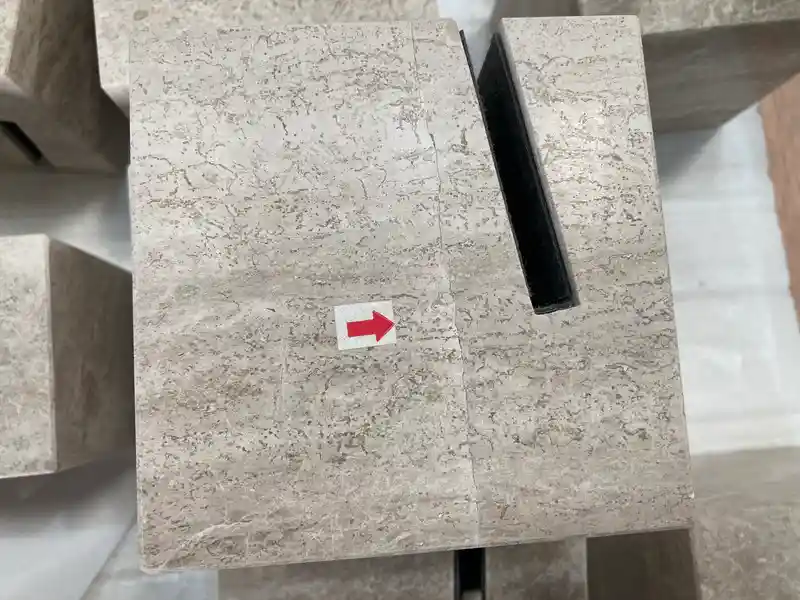
Edge & Corner Quality
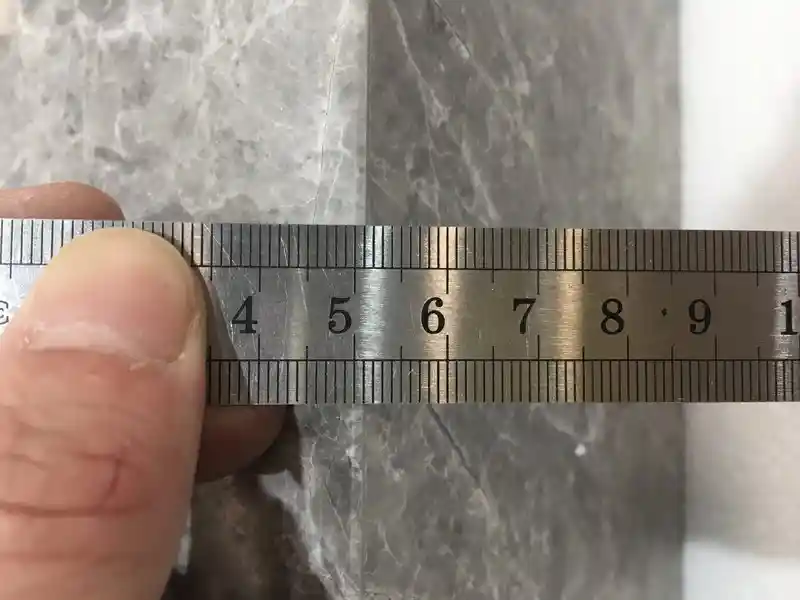
- Edge Profile: Confirm that the edge profile (bullnose, beveled, straight, or custom shape) matches the design drawing and sample
- The profile should be uniform throughout the edges; no uneven thickness or shape distortion
- Edge Finishing: Polished edges should be smooth and consistent with the surface glossiness; no rough edges or burrs
- No chipping, peeling, or incomplete processing at the edge
- Corner Treatment: If specified as sharp corners, ensure no rounding; if specified as rounded corners, check that the radius is consistent with the design
- Corners should be smooth and free of cracks or chips; no stress concentration marks
Physical Performance
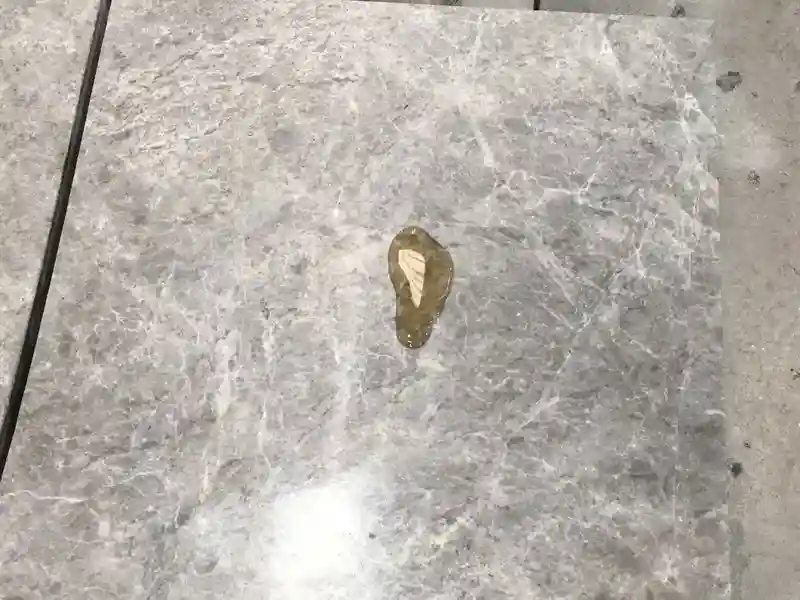
Stain Resistance: apply a small amount of cooking oil, coffee or other neutral agents for a certain period of time, no visible strains that cannot be removed with a clean cloth
Surface Hardness (when required): Test with a Mohs hardness tester; the hardness should meet the material requirements
Water Absorption Test: soak a piece of sample into water for a certain period of time and check if the surface has watermarks or darkening (signs of excessive water absorption)
Packaging & Labelling
- The sink should be covered with anti-scratch film (for polished surfaces); the film should be intact and not leave adhesive residues when peeled off
- Edges and corners should be wrapped with foam or cardboard to prevent collision damage during transportation
- Moisture-proof layers (e.g., plastic film) should be used for packaging to avoid water damage during transportation
- Packaging Integrity: No damage to the outer packaging (cartons, wooden crates); the packaging should be strong enough to withstand normal transportation impacts
- Labeling on Packaging: Outer packaging should be labeled with “Fragile”, “Handle with Care”, “Top” and other warning signs; product information (model, batch number) should be consistent with the inner product
Global Coverage, Local Knowledge
With over 300+ trained and qualified inspectors and auditors across 15+ countries and regions; we guarantee to deliver quality control services within 48 hours.
Book Your First Factory Audit?
Get a free, no-obligation quote and schedule your audit within 48 hours.
Talk to an audit expert
Contact Veriquality to secure your imports from Asia with Product Inspection, Factory Audit and Product Testing services.
- info@veriquality.net
- +86 591 8384 1281
- No. 618 Juyuan Creatize Plaza, Jinshan Avenue, Cangshan District, Fuzhou, China